
Kundan Necklace Sets
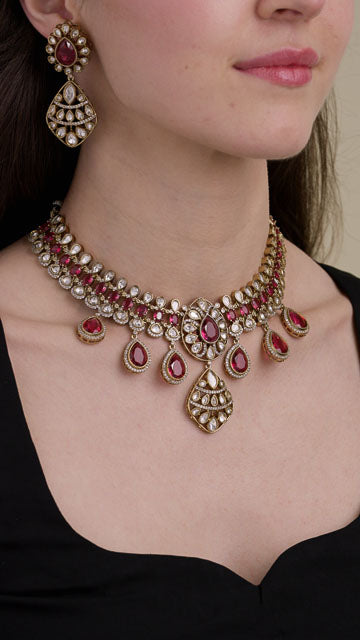
$123.00
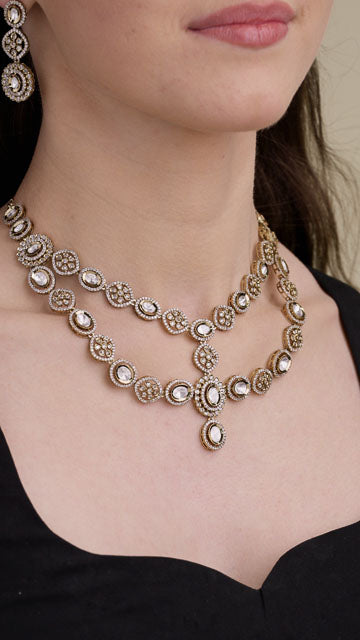
$77.00
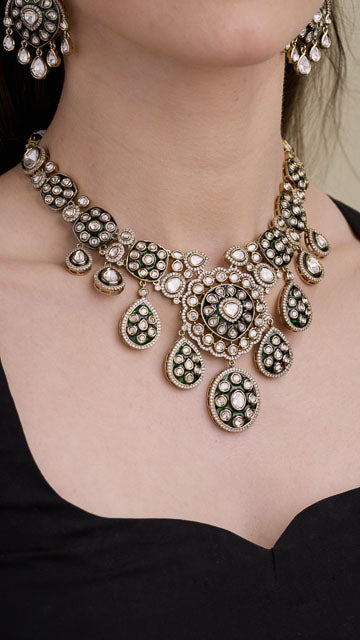
$130.00
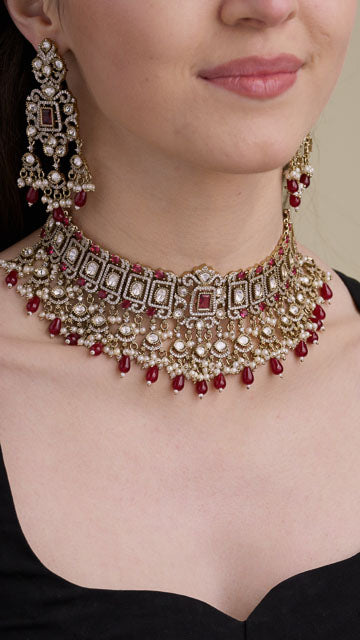
$138.00

$199.00
$69.00
$107.00
$120.00
$107.00
$135.00
$97.00
$189.00
$146.00
$84.00
$120.00
$100.00

$97.00

$135.00

$69.00

$69.00

$77.00

$115.00

$69.00
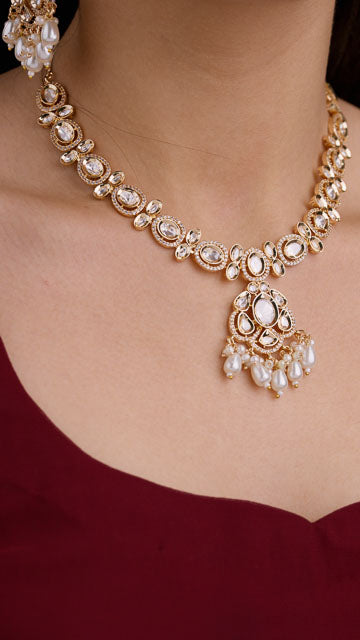
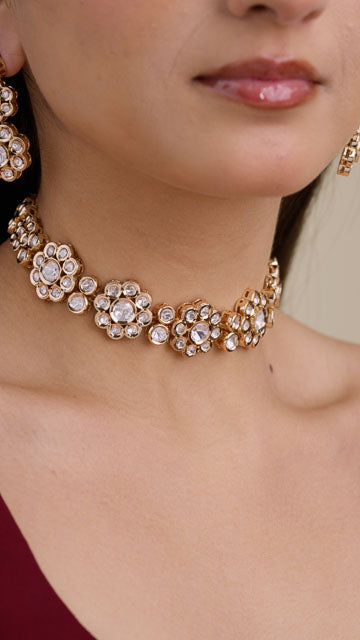
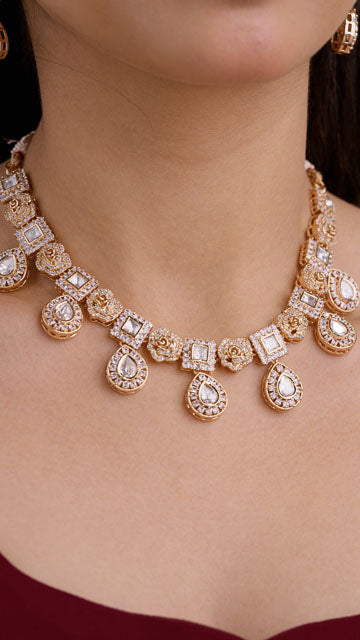
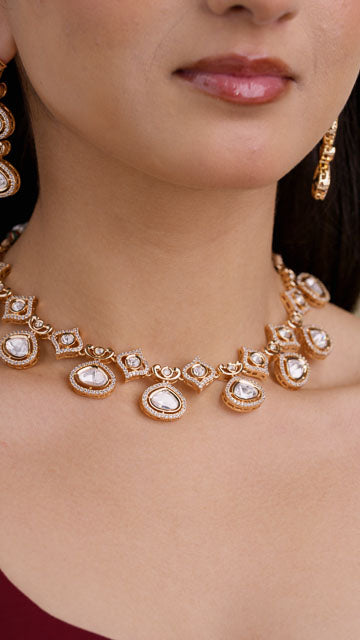
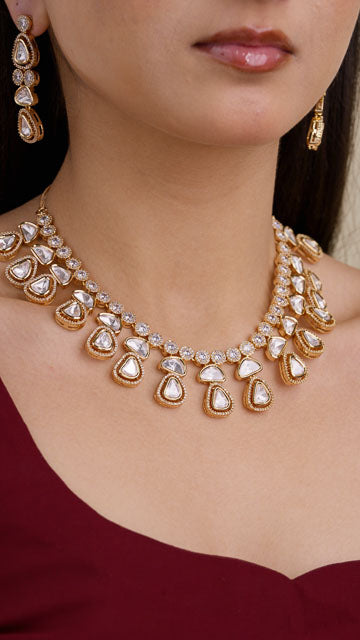
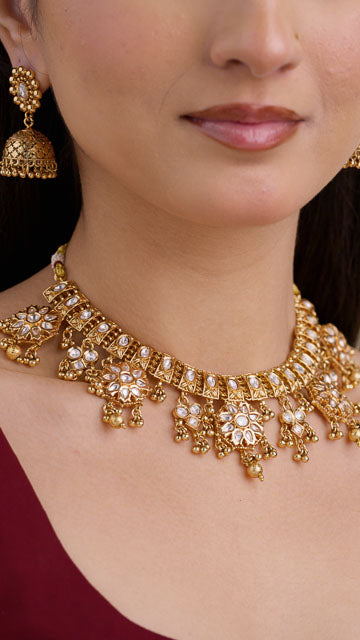
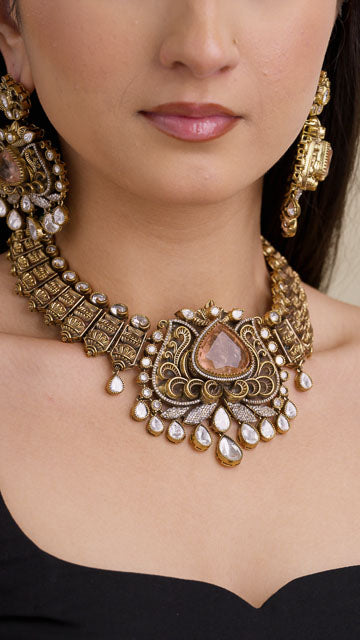
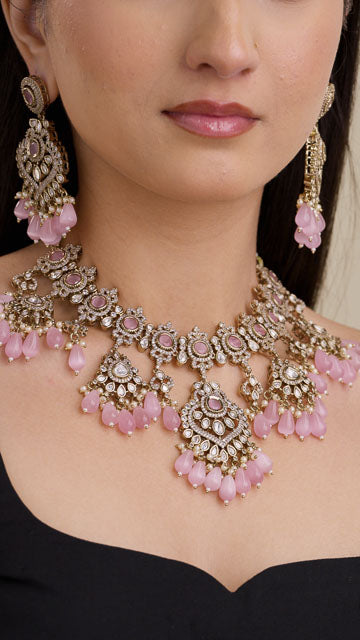
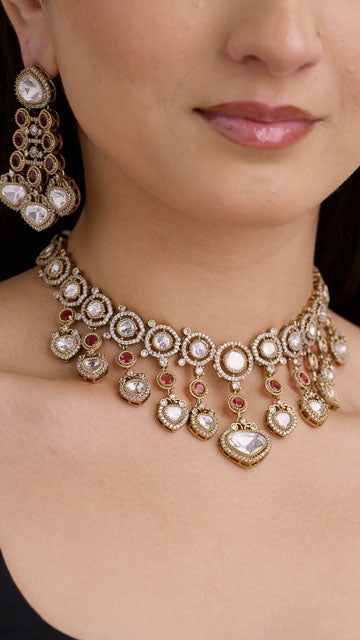
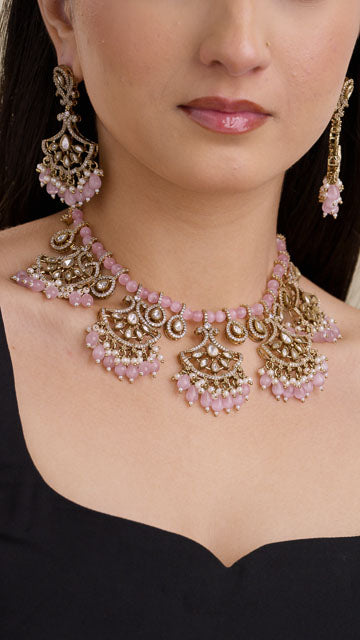
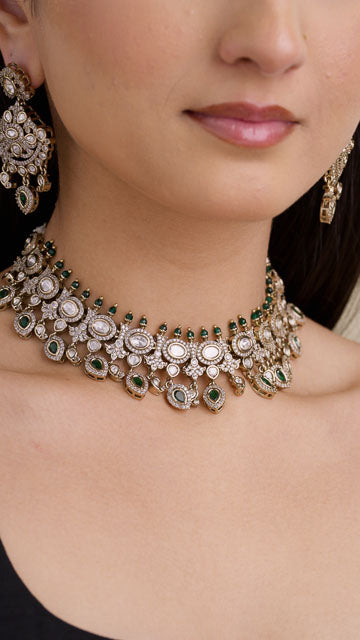
Kundan necklace sets sit at the centre of bridal and occasion jewellery because they shape the entire upper half of the look, not just the jewellery itself. This collection brings together chokers, collar-style sets, medium necklace sets, and longer bridal styles that use the familiar visual language of kundan work through reflective surfaces, framed stone detailing, and a dressier traditional finish. Historically, kundan refers to a refined stone-setting technique associated with gold foil, but in modern occasion jewellery the category often appears through kundan-look construction using an alloy base, plated finish, and glass or stone elements that recreate the same depth and glow in a more wearable format.
Within that broader look, finish matters more than many people expect. Antique tone plating often works especially well when the outfit carries antique-toned embroidery, muted zari, softer metallic thread, or a less bright bridal palette. It tends to blend into the clothing more naturally and can make the overall look feel richer rather than sharper. Yellow gold still has an important place, especially when the embroidery is cleaner, brighter, warmer, or more traditionally gold-led. The better choice is not whichever finish is newer or louder, but whichever one sits more naturally against the outfit’s actual metallic language.
This collection is best approached through shape, spacing, and neckline rather than through stone colour alone. A wider choker or collar set usually works when the blouse or neckline leaves enough room for the necklace to sit cleanly without fighting fabric, embroidery, or drape. A medium necklace set often gives more flexibility across suits, sarees, lehengas, and reception styling because it adds presence without closing the neckline too tightly. Heavier bridal styles or longer layered formats make more sense when the outfit can support more visible jewellery and when the necklace is meant to lead the look rather than simply complete it. The strongest choice is usually the set that gives enough structure to the neckline and enough brightness to the face, without making the whole front of the outfit feel crowded.
Frequently Asked Questions
How do I know whether a Kundan necklace set is right for my neckline?
When does antique tone Kundan look better than yellow gold?
Why do kundan necklace sets appear deeper or more dimensional compared to flatter stone designs?
Are Kundan necklace sets only meant for brides?
What is the difference between a Kundan choker, collar necklace, and a regular Kundan necklace set?
Can a Kundan necklace set work without looking too bridal or too heavy?
How should I think about earrings when buying a Kundan necklace set?
What gives a Kundan necklace set that soft glow instead of a sharp diamond-like shine?
Is it better to choose one strong Kundan necklace set or layer multiple pieces?


