
Kundan Earrings
Other related collections
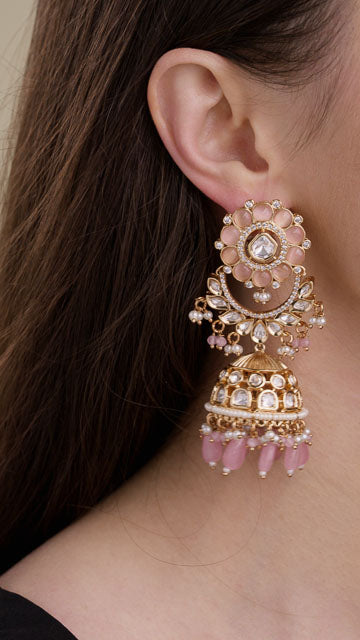
$77.00
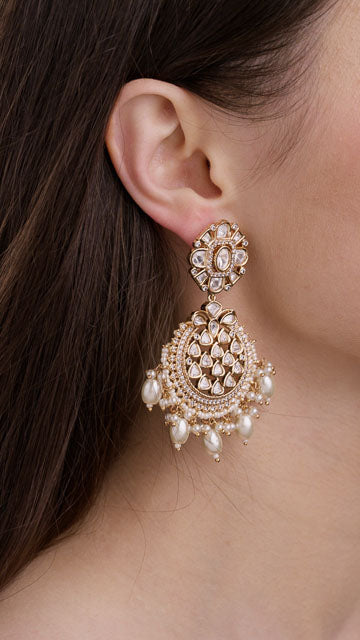
$54.00
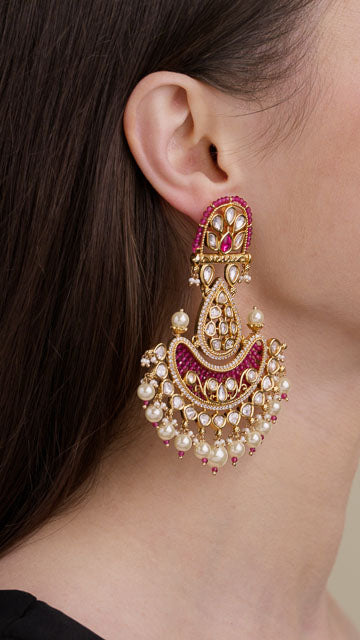
$77.00
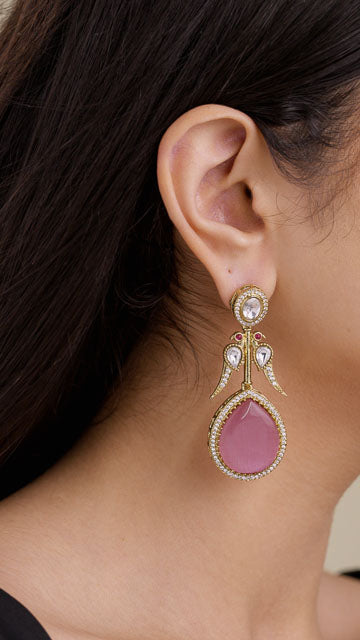
$30.00
$43.00

$27.00
$35.00
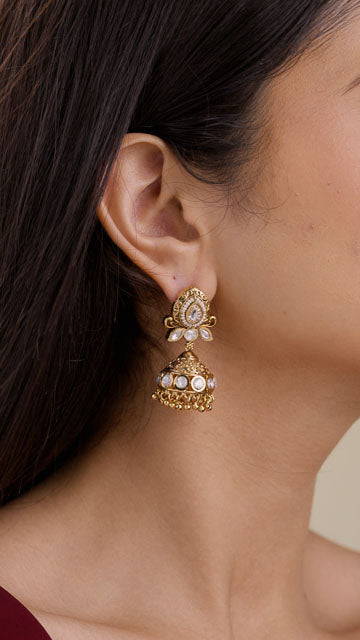
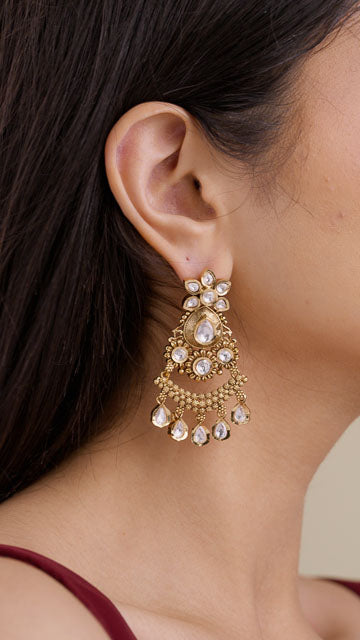
Kundan earrings shape how the jewellery sits around the face rather than how it fills the neckline. Their effect comes from reflection, scale, and movement — how the stones catch light near the skin, how the form frames the jawline, and how the piece responds when you turn or walk. This collection includes studs, jhumkas, chandbalis, and drop styles that use layered settings and framed stone placement to create a dressy, traditional presence without needing a full set to complete the look.
Across our collection, the visual direction leans more towards antique and champagne gold finishes rather than bright yellow gold. That shift changes how the earrings behave with real outfits. Softer metallic tones tend to merge more naturally with muted embroidery, aged zari, and textured fabrics, which is why these pieces often feel integrated rather than sharply highlighted. The construction follows a kundan-look approach — glass or stone elements supported with a reflective foil backing and set into an alloy base with a plated finish. In some designs, American Diamond or CZ-style stones are introduced in smaller sections, adding sharper points of light within an otherwise softer surface.
Choosing earrings here usually comes down to how much visual responsibility you want them to carry. Smaller studs or compact drops tend to stay controlled and work well when the outfit or necklace already has detail. Larger jhumkas and chandbalis introduce more movement and can take the lead when the neckline is cleaner or when you want the focus to stay closer to the face. The better choice is rarely about picking the most detailed piece, but about how naturally it sits with the outfit’s tone, texture, and overall balance.
Frequently Asked Questions
When do kundan earrings work better on their own instead of as part of a full set?
How does movement differ between studs, jhumkas, and chandbalis in actual wear?
Why do antique-tone kundan earrings feel more blended with some outfits compared to bright gold ones?
Do kundan earrings always look soft, or can they appear sharp as well?
What’s the most common mistake when choosing kundan earrings for an outfit?
Are larger kundan earrings only suitable for weddings, or can they work for other occasions as well?
How should kundan earrings be balanced with different hairstyles?


